
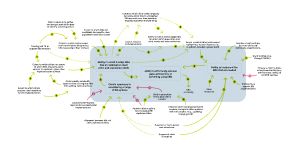


Cited references for this diagram
Early results from our PY1 evaluation, including changes in screening rates, suggest the CRCCP is working; program reach was measurable and substantial, clinics enhanced EBIs in place or implemented new ones in clinics, and we observed an increase in the overall average screening rate.

Third, the effectiveness of these EBIs on CRC order and screening uptake was significant across all populations served and independent of insurance status.
All four priority EBIs were positively associated with clinic screening rates with statistical significance (Table 3).
Overall, the average clinic-level screening rate increased by 11.7 percentage points from baseline (33.5%) to PY2 (45.2%).
Average clinic CRC screening rates generally increased when clinics implemented or enhanced any number EBIs or SAs compared to clinics that did not newly implement or enhance any EBIs/SAs.
Across all interventions and multicomponent interventions, increases in the overall FQHC screening uptake ranged from 4.9 to 26.7 percentage points. Each FQHC implemented interventions that increased CRC screening among its low-income population.
Screening uptake increased across all the sites during the implementation period, ranging from 7.1 to 18.9 % points.
